The Foundation of Lifelong Learning in Early Childhood
How Montessori Education Shapes Confident, Independent Minds
Early childhood is one of the most important stages in a child’s life. During these formative years, children develop the cognitive, emotional, and social skills that influence their future success. A strong educational foundation not only prepares them academically but also builds essential life skills such as confidence, independence, and critical thinking. Among various educational approaches, the Montessori method has gained global recognition for its ability to nurture well-rounded individuals.
The Importance of Early Childhood Education
The early years are a period of rapid brain development. Children are naturally curious and eager to learn, making it the perfect time to introduce structured yet flexible learning experiences. Quality early education helps children build a strong academic base, enhances communication skills, and encourages emotional stability.
A well-designed learning environment allows children to explore, experiment, and discover their interests. This kind of exposure not only improves academic performance but also fosters creativity and problem-solving abilities. Parents today are increasingly aware of the importance of choosing the right school that supports holistic development.
What is Montessori Education?
Montessori education is a child-centered approach developed by Dr. Maria Montessori. It focuses on self-directed learning, where children are encouraged to explore at their own pace. Unlike traditional classrooms, Montessori environments are designed to promote independence and hands-on learning.
In this system, teachers act as guides rather than instructors. They observe each child’s interests and provide appropriate learning materials to support their growth. This personalized approach ensures that every child learns in a way that suits their individual needs.
Encouraging Independence from an Early Age
One of the core principles of Montessori education is independence. Children are given the freedom to choose their activities and complete tasks on their own. Whether it’s organizing their workspace or participating in daily routines, these activities help build self-confidence.
When children learn to do things independently, they develop a sense of responsibility. This not only boosts their self-esteem but also prepares them for future challenges. Over time, they become more confident in their abilities and decision-making skills.
Fostering Curiosity and Creativity
Curiosity is the driving force behind learning. Montessori education encourages children to ask questions, explore their surroundings, and discover new concepts. Instead of memorizing information, children engage in hands-on activities that make learning meaningful.
Creative expression is also an essential part of this approach. Activities like art, music, and storytelling allow children to express their thoughts and ideas freely. This not only enhances creativity but also improves problem-solving skills and imagination.
Social and Emotional Development
Education is not just about academics; it also plays a vital role in shaping a child’s personality. Montessori classrooms promote collaboration and mutual respect among students. Children often learn in mixed-age groups, which encourages teamwork and peer learning.
Younger children learn by observing older peers, while older children develop leadership skills by helping others. This creates a supportive environment where children feel valued and understood. Emotional intelligence is also nurtured through activities that teach empathy, patience, and conflict resolution.
The Role of Teachers in Montessori Learning
In Montessori education, teachers are known as facilitators or guides. Their primary role is to observe and support each child’s learning journey. Instead of imposing a fixed curriculum, they adapt teaching methods based on the child’s interests and progress.
This approach ensures that learning remains engaging and stress-free. Children are not pressured to compete with others but are encouraged to focus on their own growth. This helps in developing a positive attitude towards education.
Creating a Prepared Learning Environment
The Montessori classroom is carefully designed to support independent learning. Everything is arranged in a way that is accessible to children, encouraging them to explore and take responsibility for their environment.
Learning materials are organized on open shelves, allowing children to choose activities freely. Each material is designed to develop specific skills, ensuring a balanced learning experience. The environment is calm, structured, and conducive to focused learning.
Academic Excellence Through Practical Learning
Montessori education integrates academic concepts with real-life experiences. Subjects like mathematics, language, and science are taught through hands-on activities that make learning engaging and effective.
For instance, children learn mathematical concepts using physical objects, which helps them understand abstract ideas more easily. Language skills are developed through interactive storytelling and reading activities. This practical approach ensures a deeper understanding of concepts.
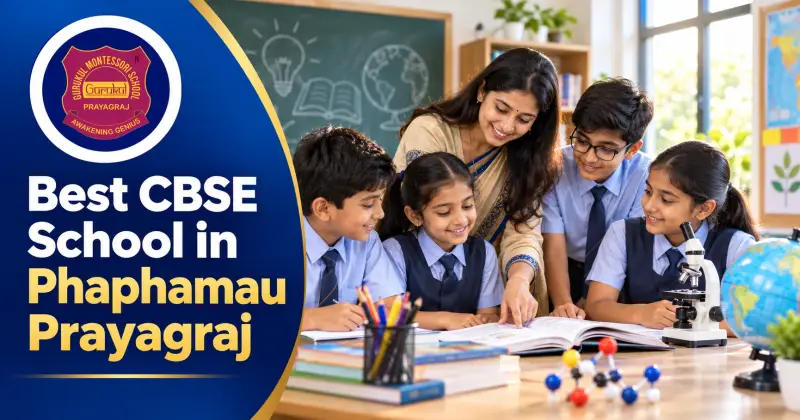
In the middle of this holistic learning journey, many parents searching for the best CBSE school in Phaphamau, Prayagraj often look for institutions that combine academic excellence with modern teaching methodologies, ensuring children receive both conceptual clarity and life skills.
Building Essential Life Skills
One of the biggest advantages of Montessori education is its focus on life skills. Children learn important skills such as time management, organization, and problem-solving from an early age. These skills are crucial for success in both academic and personal life.
The ability to think independently, adapt to new situations, and communicate effectively gives Montessori students an edge. These qualities help them excel not only in school but also in their future careers.
Why Montessori Education is Gaining Popularity
In today’s competitive world, parents are looking for educational approaches that go beyond traditional methods. Montessori education offers a balanced approach that focuses on the overall development of a child.
The emphasis on individuality, creativity, and emotional well-being makes it a preferred choice for many families. Children develop a love for learning, which stays with them throughout their lives.
Preparing Children for the Future
The world is constantly evolving, and the skills required for success are changing rapidly. Montessori education prepares children for these changes by fostering adaptability and critical thinking.
Children are encouraged to explore new ideas, take initiative, and embrace challenges. This mindset is essential for success in a dynamic and ever-changing world. By focusing on holistic development, Montessori education ensures that children are well-prepared for future opportunities.
Conclusion
Choosing the right educational path for a child is one of the most important decisions parents can make. Montessori education provides a strong foundation for lifelong learning by nurturing independence, creativity, and emotional intelligence.
With its child-centered approach and focus on practical learning, it helps children grow into confident and capable individuals. Schools that adopt this methodology create an environment where children can thrive academically and personally. Gurukul Montessori School stands as a place where these values come to life, offering children the opportunity to learn, explore, and succeed.
Frequently Asked Questions (FAQs)
1. What is Montessori education?
Montessori education is a child-focused learning approach that emphasizes independence, hands-on activities, and self-directed learning.
2. At what age can children start Montessori education?
Children can start Montessori education as early as 2.5 to 3 years old.
3. How does Montessori differ from traditional education?
Montessori focuses on individualized learning and exploration, while traditional education follows a structured curriculum with teacher-led instruction.
4. Are Montessori students academically strong?
Yes, Montessori students often perform well academically due to their strong conceptual understanding and problem-solving skills.
5. Is Montessori education suitable for every child?
Yes, it is designed to accommodate different learning styles and individual needs.
6. How does Montessori education improve social skills?
Children learn in mixed-age groups, promoting collaboration, empathy, and communication.
7. What role do teachers play in Montessori classrooms?
Teachers act as guides who support and observe rather than direct learning.
8. Are there exams in Montessori education?
The focus is more on skill development and understanding rather than traditional exams and grades.
9. How can parents support Montessori learning at home?
Parents can encourage independence, provide a structured environment, and allow children to explore freely.
10. Why should parents choose Montessori education?
It offers holistic development, fostering academic excellence, creativity, and essential life skills.
Related Post


Recent post