Children Do Not Learn by Sitting Still — The Powerful Science Behind Learning Through Experience
Every time a child touches, builds, experiments, fails, and tries again, something extraordinary is happening in their brain. The schools that understand this are producing a fundamentally different kind of learner.
Picture two classrooms. In the first, thirty children sit in rows facing a blackboard. A teacher explains how plants absorb water through their roots. Children copy the diagram from the board into their notebooks. A test next Friday will ask them to reproduce that diagram and label its parts correctly. Some will. Some will not. Most will forget the diagram within a month.
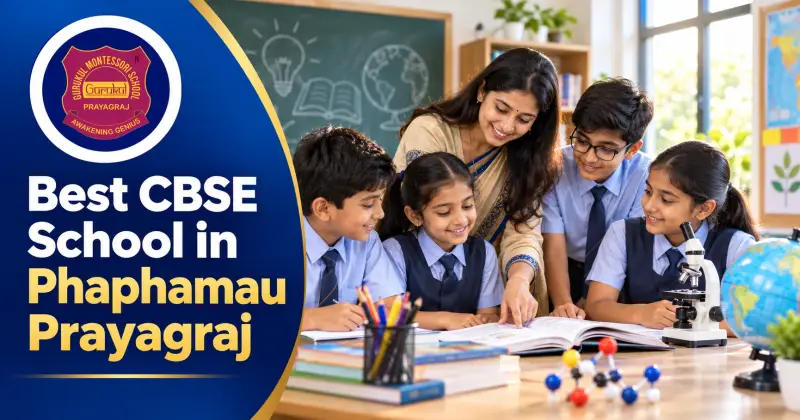
In the second classroom, children are gathered around trays of soil, seeds, and transparent cups. They plant seeds at different depths and in different soil conditions. They predict what will happen. Over the following weeks they observe, measure, sketch, and discuss what they see — and what surprises them. They encounter questions their teacher did not anticipate. They argue gently about why one plant grew faster than another. They care about the outcome because they are invested in it.
Both classrooms are teaching the same topic. Only one of them is producing genuine understanding. The difference between them is not the quality of the teacher's knowledge. It is the method — and the method, as decades of research in cognitive science and developmental psychology confirm, changes everything.
What Experience Actually Does to the Learning Brain
The human brain is not a passive vessel into which knowledge can be poured. It is an active, experience-hungry organ that builds understanding by doing — by engaging with the physical world, making predictions, encountering results, revising assumptions, and repeating the cycle. This is not a metaphor. It is neuroscience.
When a child handles a physical object — weighs it, measures it, builds with it, takes it apart — multiple regions of the brain are activated simultaneously. Sensory input, motor engagement, emotional response, and cognitive processing all fire together. The neural pathways formed in these moments of active, embodied engagement are significantly stronger and more durable than those formed through passive listening or reading alone. In plain terms: children remember what they experience in a way that they simply do not remember what they are told.
This is why a child who has once baked bread understands the chemistry of yeast in a way that no textbook diagram can fully communicate. It is why a child who has navigated a real map in an unfamiliar place understands geography differently from one who has only labelled countries on a printed worksheet. The experience does not replace the concept — it grounds it, anchors it, and makes it real in a way that lasts.
The Problem With Passive Schooling — and Why It Persists
If experiential learning is so clearly effective, the obvious question is why passive, lecture-based teaching remains so dominant in schools. The answer is not mysterious — it is structural. Passive teaching is easier to standardise, easier to assess, and easier to deliver to large groups of children at the same time. A teacher explaining a concept to thirty children simultaneously is a more logistically manageable system than thirty children engaged in thirty individual investigations, even if the latter produces dramatically better learning outcomes.
Examinations, too, have historically rewarded the kind of recall that passive learning produces — at least in the short term. A child who has memorised a formula can reproduce it on a test. Whether that child understands the principle behind the formula, can apply it to an unfamiliar problem, or will remember it a year later is a different question entirely — and one that conventional assessment rarely asks.
The result is a system that produces students who are often highly trained at performing in school but less equipped to think independently, solve novel problems, or engage with genuine intellectual curiosity once the performance pressure of examinations is removed. This is the cost of passive schooling. It is a cost that is rarely acknowledged explicitly, but it is paid — by students, by universities, and ultimately by the societies those students go on to shape.
What Genuine Experiential Education Looks Like in Practice
Experiential education is a term that, like many educational buzzwords, risks being diluted through overuse. Every school that takes children on one field trip per year and calls it experiential learning is missing the point — and potentially misleading the families who trust its language.
Genuine experiential education is not an occasional event. It is a daily orientation — a consistent commitment to learning through doing, discovering, questioning, and reflecting. It shows up in the way mathematics is taught through physical manipulation of materials before abstract symbols are introduced. It shows up in science lessons built around genuine inquiry rather than pre-determined demonstrations. It shows up in language arts, where children write for real audiences and real purposes rather than producing essays that only their teacher will ever read. It shows up in social studies, where community engagement and real-world problem-solving are treated as legitimate and valuable academic work.
Families who are specifically seeking an experiential learning school for their child should look beyond the language in a school's prospectus and ask to see what a typical week actually looks like — not the highlights, not the annual science fair or the art exhibition, but the ordinary Tuesday morning in Class 4. If that ordinary morning involves children actively engaged, making choices, encountering real questions and genuine uncertainty, and working through problems with the support of a teacher who guides rather than dictates — that is an experiential learning school in the truest sense.
The Skills That Experiential Learning Builds — and Why They Matter Now
The skills produced by genuine experiential education are precisely the skills that the contemporary world most urgently needs and most consistently struggles to find. Critical thinking — the ability to evaluate evidence, identify assumptions, and reach reasoned conclusions — is not developed by memorising someone else's conclusions. It is developed by practising the process of reasoning, repeatedly, across many different kinds of problems and contexts.
Creativity — the capacity to generate novel solutions to unfamiliar challenges — is not nurtured in environments where every question has a predetermined correct answer. It flourishes in classrooms where children are regularly invited to approach open-ended challenges without a prescribed path to the solution. Collaboration — the ability to work effectively with people whose perspectives and strengths differ from your own — is learned not through instruction but through genuine, sustained experience of working together toward shared goals.
These are not soft skills, and they are not secondary to academic achievement. They are the foundation on which lasting academic achievement is built — and they are the qualities that universities, employers, and society at large most value and most consistently find lacking in candidates who have been educated purely through passive, examination-driven systems.
The Teacher's Transformed Role
Experiential education asks something different and more demanding of teachers than traditional schooling does. It is, in some ways, easier to stand at the front of a classroom and deliver a prepared lesson than it is to design an environment in which thirty children can explore, discover, and construct understanding in ways that the teacher cannot fully predict or control. The experiential classroom requires teachers who are secure enough in their own knowledge to welcome unexpected questions. It requires teachers who trust children as capable learners, who can observe carefully and intervene precisely — offering exactly the right amount of support at exactly the right moment, and then stepping back.
This kind of teaching is a genuine professional skill, and it must be cultivated deliberately through training, mentorship, and a school culture that values and models it. When you find teachers who teach this way — who are visibly energised by their students' discoveries, who ask more questions than they answer, who celebrate a child's confusion as the beginning of understanding rather than a failure of instruction — you have found something rare and profoundly valuable.
Learning That Lasts a Lifetime
At Gurukul Montessori School, experiential learning is not a philosophy we have adopted because it is fashionable — it is the foundation on which our entire educational approach has been built, drawing on the enduring wisdom of Montessori education and the best of contemporary cognitive science. Our children learn mathematics by working with materials before they work with symbols. They learn science by investigating genuine questions before they study textbook answers. They develop language through real communication, real stories, and real audiences. And they develop the habits of mind — curiosity, persistence, reflection, and intellectual courage — that will serve them not just through their school years but through every challenge and opportunity that follows. We do not prepare children for school. We prepare them for life. And we do it the way the brain was always designed to learn — through rich, purposeful, joyful experience.
Gurukul Montessori School · Prayagraj · Where children learn by living, doing, and discovering.
Related Post




Recent post