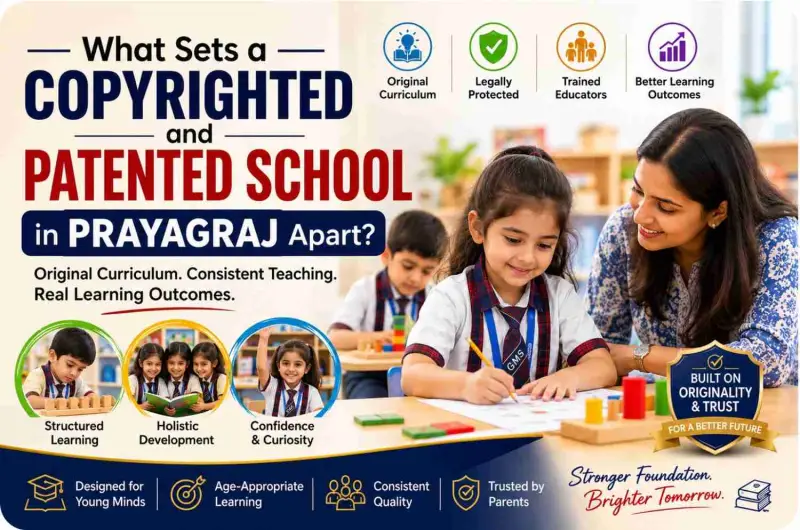
What Sets a Copyrighted and Patented School in Prayagraj Apart
How an Original, Protected Curriculum Shapes Better Learning Outcomes
Choosing the right school is one of the biggest decisions a parent makes, and it goes far beyond checking the size of the playground or the number of smart classrooms. Today, families in Prayagraj are asking sharper questions: Who designed this curriculum? Is it original? Can I trust that every classroom actually delivers what the brochure promises?
These questions matter more than ever because so many schools now claim to follow "modern" or "child-centered" methods without any real ownership over what that means in practice. A copied worksheet or borrowed slogan does not guarantee a consistent, high-quality learning experience for your child.
The Value of an Original, Legally Protected Learning System
This is where legal protection around a curriculum starts to matter. When a school's teaching framework, learning materials, or instructional method is formally copyrighted or patented, it means the content has been independently created, documented, and legally recognized as original work, not assembled from templates found online or borrowed from other institutions without accountability.
A Copyrighted and Patented School in Prayagraj offers families a rare kind of assurance: the teaching model is not just marketed language, it is a protected, verifiable system that the institution is legally bound to deliver consistently across every classroom and every academic year. That consistency is the real benefit. Parents are not relying on a single good teacher or a lucky batch; they are relying on a documented method that has been tested, refined, and locked into place.
What This Means Inside the Classroom
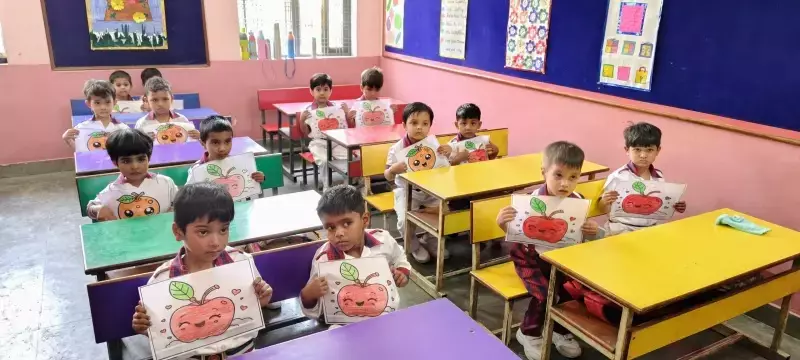
For a young child, this translates into a steadier day-to-day experience. Lessons build on each other in a planned sequence rather than shifting with staff turnover. Learning materials are designed to match specific developmental stages, so a four-year-old is not handed the same worksheet as a six-year-old with the font simply made bigger.
Trained educators follow this documented method closely, which reduces the guesswork that often creeps into early education. Hands-on materials, sensory activities, and small-group instruction are not one-off ideas pulled from a workshop; they are part of a structured, repeatable framework designed to support how young children actually absorb language, numbers, and social skills.
Parents often notice the difference in small ways first: a child who can explain what they learned rather than just repeating a rhyme, or a teacher who can point to exactly where a student is in a defined learning sequence rather than offering a vague progress update.
Choosing the Right Fit for Your Child
When evaluating schools, it helps to ask direct questions rather than relying on general impressions. Is the curriculum owned and documented by the institution, or licensed loosely from elsewhere? Are teachers trained specifically in this method, and how often is that training refreshed? Is there a clear, age-appropriate progression from one year to the next?
A school that can answer these clearly, and back it up with real documentation, is signaling something important: it has invested in building something durable rather than assembling a marketing pitch. That distinction is worth far more over a child's first years of schooling than any single amenity.
Final Thoughts
Early education sets the tone for how a child learns, thinks, and engages with the world for years to come. A protected, original curriculum is not just a legal detail, it is a promise of consistency, accountability, and genuine educational design behind every lesson. Gurukul Montessori School is built around exactly this principle, combining a documented, child-centered method with trained educators who follow it with care. Families in Prayagraj looking for a learning environment built on real substance, not just good marketing, are welcome to visit, ask questions, and see the classrooms in action.
Related Post

Recent post