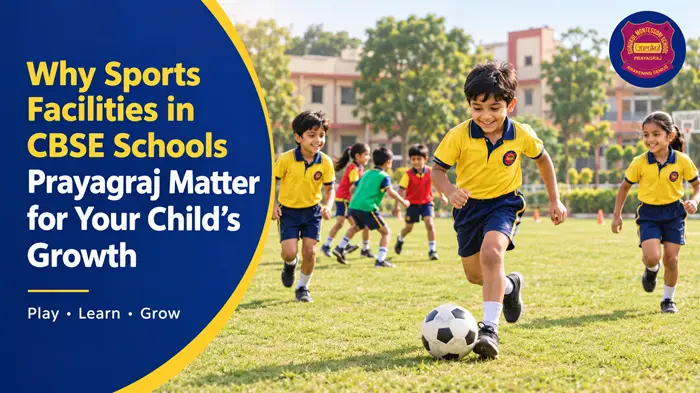
Why Sports Facilities in CBSE Schools Prayagraj Matter for Your Child's Growth
What parents should look for in a school that values play as much as study
Every parent wants a child who scores well, but a healthy, confident, and resilient child matters just as much. Children today spend long hours indoors with screens, and school is often the only place they get regular physical activity. Sports should not be treated as an optional extra. This blog explains why they matter and what to check before you choose a school.
Why Sports Matter in School Education
Physical activity does far more than keep children fit. Regular play improves concentration, memory, and mood, all of which support classroom learning. Children who move more tend to sleep better, handle stress better, and stay more attentive during lessons. The CBSE framework also encourages physical education as part of holistic development, so sports are an important part of a child's schooling.
Life Skills Children Learn on the Field
Teamwork. Playing in a team teaches children to cooperate, share responsibility, and support one another.
Discipline. Practice sessions build punctuality, patience, and respect for rules.
Resilience. Winning and losing are both part of the game. Children learn to handle disappointment and try again.
Leadership. Captaining a team or organising a match builds confidence and decision-making.
These lessons stay with children long after school ends.
What to Look for When Choosing a School
Sports facilities in CBSE schools Prayagraj vary widely, so it is worth looking beyond a single playground. During your visit, check for:
- A spacious, well-maintained outdoor playground
- An indoor area for games such as table tennis, carrom, or chess
- Trained physical education teachers and coaches
- Age-appropriate equipment for different classes
- Regular sports periods in the timetable, not just on paper
- Annual sports day and opportunities for inter-school competitions
A school that invests in these areas shows that it values the physical wellbeing of its students.
Safety and Quality Coaching
Good facilities mean little without proper supervision. Ask whether trained staff monitor play areas, whether first-aid support is available, and whether equipment is checked regularly. Coaches should also match the activity to each child's age and ability, so that no child is pushed too hard or left out.
Sports for Young Children
For younger learners, sport does not mean competition. Running, jumping, balancing, climbing, and group games build coordination, strength, and confidence. Free play and structured movement activities help small children develop motor skills while enjoying themselves. A school that understands early childhood development will make physical activity a joyful part of the daily routine.
Balancing Sports and Studies
Some parents worry that sports will distract from academics. In practice, the opposite is often true. Children who play regularly learn to manage time, focus better in class, and return to their books refreshed. A good school plans its timetable so that studies and sports support each other.
Conclusion
A strong school nurtures the body as well as the mind. When you compare schools, look closely at the playground, the coaches, the safety measures, and the school's attitude toward play. At Gurukul Montessori School, we believe every child deserves space to move, play, and grow alongside their academic learning. We welcome you to visit our campus and see how we help children build strength, confidence, and character.
Frequently Asked Questions
1. At what age should children start formal sports activities at school?
Children can begin with simple movement-based play from the early years. Structured team sports are usually introduced gradually as they grow older.
2. Do sports activities affect academic performance?
Not negatively. Regular exercise improves focus, memory, and mood, which often support better results in class.
3. What indoor games are suitable for school children?
Table tennis, chess, carrom, and badminton are popular choices that develop concentration and coordination, especially during bad weather.
4. How can I check whether a school's sports facilities are safe?
Visit the playground, look at the condition of the equipment, ask about trained supervisors, and confirm that first-aid support is available.
5. How can I encourage my child to take part in school sports?
Show interest in their activities, praise effort rather than only winning, and let them try different games until they find ones they enjoy.
Related Post



Recent post