Educating the Whole Child — Why the Most Successful Students Are Not Necessarily the Ones Who Studied the Hardest
The schools producing the most remarkable young people are not the ones that push hardest on academics alone — they are the ones that understand a child is a mind, a body, a spirit, and a social being, all of which deserve equal and deliberate cultivation.
There is a quietly devastating irony at the heart of much of India's school education. The system that is designed to prepare children for a full and flourishing life frequently does so by stripping away the very experiences that make life full and flourishing — art, sport, music, play, meaningful relationships, creative risk-taking, and the spacious, unhurried time to develop a genuine sense of self. In pursuit of the examination score, the child is progressively narrowed. By the time they reach senior secondary school, many students are remarkably efficient at producing correct answers and remarkably uncertain about who they are, what they value, and what kind of life they want to build.
This is not the inevitable consequence of taking education seriously. It is the consequence of taking education seriously in too narrow a way — of mistaking the examination for the destination rather than understanding it as one milestone on a much longer and more richly varied journey. The schools that have understood this distinction — and have built their entire approach around it — are producing graduates who are not merely academically credentialed but genuinely prepared: intellectually capable, emotionally intelligent, physically vital, creatively alive, and possessed of a moral clarity and personal confidence that no examination can either confer or measure.
This is what holistic education actually means. Not a softer version of real education. Not academic rigour with some art classes added on the side. A fundamentally different and more complete understanding of what children need, what schools are for, and what education — at its highest aspiration — is capable of producing.
The Dimensions of a Complete Human Education
To understand what holistic education offers, it helps to map the full terrain of human development that a genuinely complete school experience should address. Thinkers in philosophy, psychology, and education have approached this question from many different angles, but certain dimensions appear consistently across every serious framework.
Intellectual development — the cultivation of curiosity, critical thinking, conceptual understanding, and the love of learning — is the dimension most schools acknowledge and pursue, with varying degrees of success. But intellectual development alone does not produce a complete human being. It produces, at best, a well-informed one.
Emotional development — the ability to understand, regulate, and express one's own emotions; to empathise with others; to navigate conflict with maturity; and to sustain meaningful relationships — is the dimension most frequently neglected in schools that prioritise academic performance above all else. Yet emotional intelligence is, by most measures, a stronger predictor of life success and personal wellbeing than academic intelligence alone. The child who can manage their own anxiety, support a struggling friend, recover from rejection without collapsing, and communicate their needs with clarity and respect is a child who is equipped for life in a way that no examination score can fully reflect.
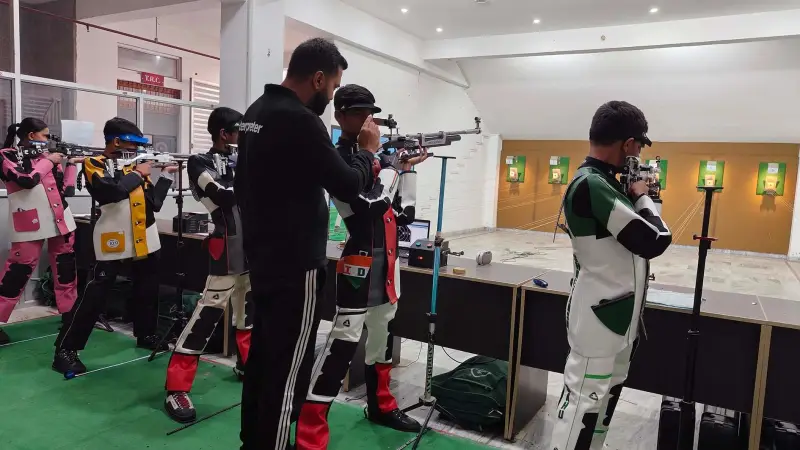
Physical development — not merely fitness, but the deep bodily self-knowledge, the habits of physical activity, the competitive spirit, and the embodied confidence that come from genuine engagement with sport and movement — is another dimension that schools reduce at their peril. The research connecting physical health to cognitive performance, emotional regulation, and long-term wellbeing is overwhelming. A child whose body is cared for learns better, feels better, and engages more fully with every other dimension of school life.
Creative development — the cultivation of imagination, aesthetic sensitivity, and the capacity to make something from nothing — is the dimension perhaps most poorly served by school systems built around standardised assessment. Yet creativity is not a supplement to serious thinking. It is a form of serious thinking — one that develops divergent reasoning, tolerates ambiguity, and produces the kind of original contribution that the world most urgently needs and most consistently fails to find.
And moral development — the cultivation of values, ethical reasoning, civic responsibility, and a genuine sense of accountability to others — is the dimension that determines whether all the other capabilities a school develops are used wisely, generously, and for purposes worth pursuing.
Why Narrow Schools Produce Narrow Outcomes
Schools that focus exclusively or overwhelmingly on academic performance do not merely neglect the other dimensions of development — they actively compromise them. When art, music, sport, and free creative time are consistently deprioritised in favour of additional academic contact hours, children receive a clear and powerful message: these things do not matter. The part of you that wants to paint, to run, to sing, to daydream, to make something just for the joy of making it — that part is not valuable here.
Children internalise this message with remarkable efficiency. By the time many students reach secondary school, the natural curiosity, creative confidence, and physical exuberance that characterised them at five or six years old has been substantially suppressed — not by any single teacher or policy, but by the accumulated weight of a system that has consistently communicated, through its priorities and its rewards, that only one kind of intelligence counts.
The consequences extend well beyond childhood. Adults who were educated narrowly often struggle with exactly the capabilities that the contemporary world most demands. They find it difficult to think creatively about unfamiliar problems. They are less resilient in the face of failure, having had fewer opportunities to experience and recover from it. They are less comfortable with ambiguity, having spent their educational years in environments where every question had a predetermined correct answer. And they are sometimes less kind — not because they are bad people, but because the cultivation of empathy and social awareness was never treated as an educational priority.
What Research Confirms About Whole-Child Education
The case for holistic education is not merely philosophical. It is empirically robust and growing stronger with every passing year of research in developmental psychology, neuroscience, and educational outcomes. Children who attend schools that invest seriously in all dimensions of their development — academic, emotional, physical, creative, and moral — consistently outperform their narrowly educated peers on the very academic measures that schools obsessed with results claim to prioritise.
The mechanism is not mysterious. Children who feel emotionally safe are more cognitively available for learning. Children who have regular physical activity have brains that are better prepared for concentration and memory consolidation. Children who have engaged creatively develop the divergent thinking that makes them better problem-solvers in every domain. Children who have developed strong social skills collaborate more effectively, communicate more persuasively, and lead more successfully. And children whose moral development has been genuinely cultivated make better decisions — in their academic lives, in their relationships, and in their eventual professional and civic roles.
Holistic education, the research shows, does not come at the cost of academic excellence. It is the condition under which genuine academic excellence most reliably and most sustainably flourishes.
Identifying a School That Truly Delivers on This Promise
Parents who are deliberately seeking a genuinely holistic education school for their child — one whose commitment to whole-child development is real rather than rhetorical — need a clear-eyed framework for evaluation. Because the language of holistic education has become so widespread in school marketing materials, the risk of being persuaded by words rather than evidence is significant.
Begin with the timetable. A school that genuinely values all dimensions of development will protect time for art, music, sport, and creative activity even as examination pressure mounts — not eliminate it. The timetable is one of the most honest documents a school produces, because it reflects actual priorities rather than stated ones. Ask to see how a typical week is structured across different year groups, and pay particular attention to how the balance between academic and non-academic time changes as students progress through the school.
Look next at how the school talks about its students. Does it celebrate a diverse range of achievements — the student who composed a piece of music, the one who broke a personal athletic record, the one who showed outstanding kindness during a difficult time for a classmate — or does it celebrate primarily and overwhelmingly academic results? The things a school chooses to celebrate reveal, with great clarity, the things it actually values.
Ask about the school's approach to student wellbeing — not as a welfare provision activated only when problems arise, but as an active, proactive, and systematically supported dimension of school life. Schools that have genuine pastoral care structures, that train teachers in social-emotional learning, and that create regular opportunities for students to reflect on and discuss their inner lives are schools that take emotional development seriously. Schools that address wellbeing only when a crisis has already occurred are schools that treat it as a peripheral concern.
Finally, speak with students currently in the school. Ask them — directly and without leading — what they enjoy most about their school, what they find most challenging, and what they would change. The candour and richness of their responses, and the particular things they choose to mention, will tell you more about a school's true culture than any amount of carefully prepared marketing material.
The Child Who Leaves Whole
The ultimate measure of a school's success is not the percentage its students score on their final board examination. It is the kind of person those students become — the quality of their thinking, the depth of their character, the warmth of their relationships, the resilience of their spirit, and the generosity with which they apply their capabilities to the world around them.
A student who leaves school academically strong but emotionally fragile, creatively stunted, physically neglected, and morally underdeveloped has not received a complete education — regardless of what their results say. A student who leaves school with genuine intellectual capability, emotional intelligence, physical vitality, creative confidence, and a strong sense of personal values has received something that will serve them and the world they inhabit for the rest of their lives.
That is the promise of holistic education. It is a higher and more demanding promise than the production of examination results. It is also, for any school with the courage and the vision to pursue it, the most profoundly rewarding one.
Where Every Dimension of Your Child Is Cherished and Developed
At Gurukul Montessori School, holistic education is not a philosophy we display on our walls — it is the living reality of every school day we offer. Our programme is built on the Montessori conviction that every child arrives in the world as a complete human being — intellectually curious, physically energetic, creatively expressive, socially hungry, and morally receptive — and that our role is not to shape them into something different but to honour, develop, and challenge every dimension of who they already are. We invest equally and intentionally in academic rigour, emotional intelligence, physical development, creative expression, and the cultivation of values and character — because we know that it is only when all of these dimensions are genuinely nurtured that a child becomes truly, completely, and lastingly educated. We do not produce high scorers. We nurture whole human beings. And we believe, with complete conviction, that those are the same goal — pursued together, from the very first day.
Gurukul Montessori School · Prayagraj · Nurturing complete human beings, one school day at a time.
Related Post




Recent post